4 minute read
TRUSTED GUIDE

I'm a mum and wellness researcher who discovered something terrifying in my own kitchen. Here's what I found.
5 Reasons Your Plastic Utensils Are Poisoning Your Family
5 Reasons Your Plastic Utensils Are Poisoning Your Family
What I discovered about microplastics, chemicals, and kitchen safety…
(and why one simple switch changed everything)
Research-Backed | Evidence-Based Guide
1000+ families trusted this guide
What I discovered about microplastics, chemicals, and kitchen safety
(and why one simple switch changed everything)
Read by 1,000+ families this week
I Stopped Using Plastic Utensils After Learning This.
Last month, I discovered something terrifying about the utensils I use 3 times a day.
Every single meal, my family… especially my kids… were ingesting something I never expected.
microplastics and chemicals from breaking down plastic kitchen tools.
I didn't realise it at the time. I thought plastic was safe.
But when I started researching what was actually happening in my kitchen, everything changed.
I found 5 dangers that most parents have no idea about.
Here they are… and more importantly, here's what I did about it.
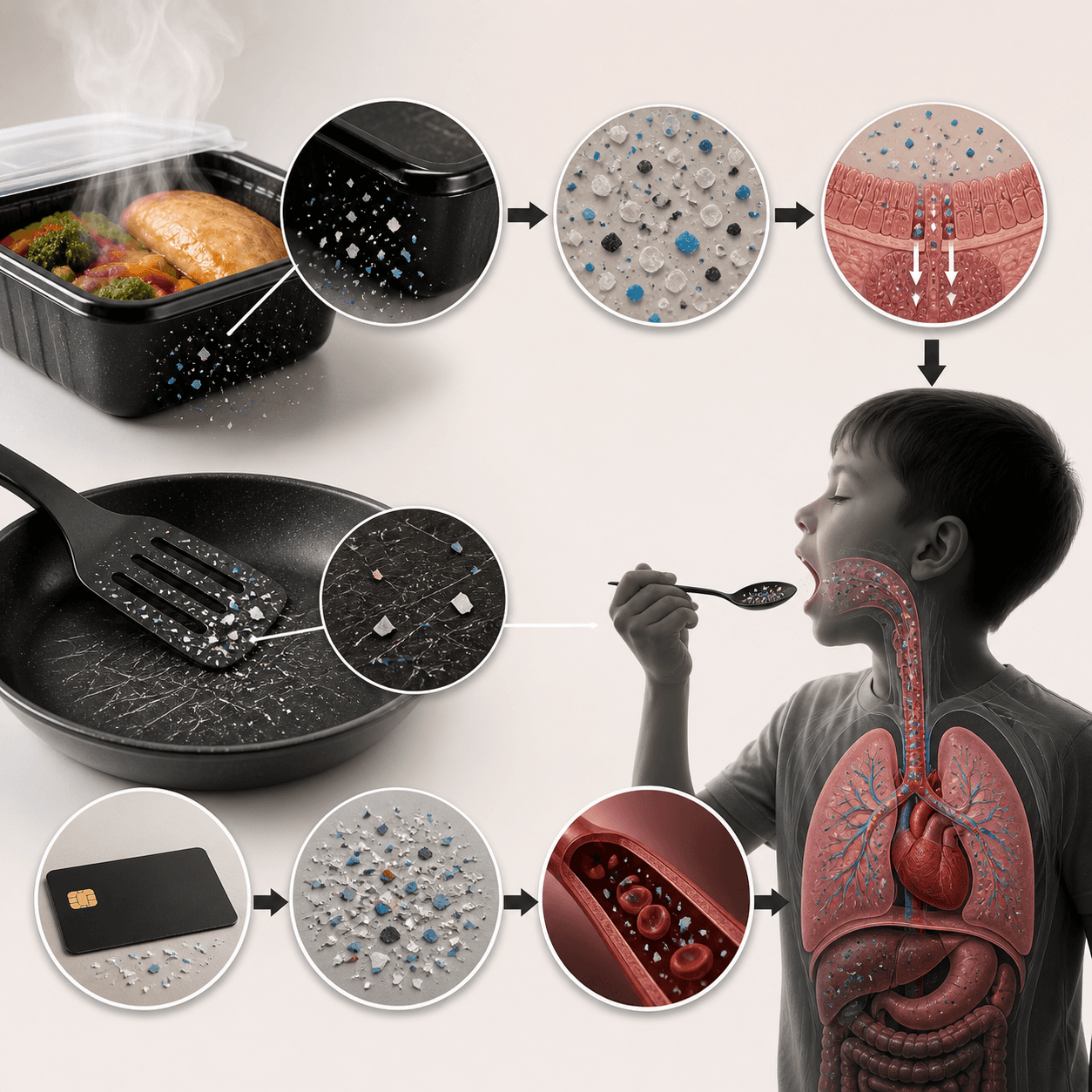
Here's what keeps me up at night:
A 2023 study published in Environmental Science & Technology found that when plastic containers were subjected to heat (microwaving), they released anywhere from hundreds of thousands to millions of microplastic and nanoplastic particles per square centimetre of surface area.
Let that sink in.
Another study estimated that infants and toddlers consuming food from polypropylene plastic containers could ingest up to 2.2 MILLION microplastic particles per day… simply from the normal act of eating.
I know. That's a massive number. And it sounds scary (almost too scary to be real, right?).
But here's what actually makes it dangerous: These aren't large plastic chunks. They're microscopic particles… so small they can pass straight through your gut lining and into your bloodstream. Once they're in your system, they don't leave. They accumulate.
To put it in perspective: Research suggests you're ingesting roughly the equivalent of one plastic credit card per year… just broken down into microscopic pieces.
Over a lifetime, that adds up. And unlike large plastic, these micro-particles can lodge in organs and trigger inflammatory responses.
2.2 million. Per day.
And that's just from containers. When you add plastic utensils that are constantly being scratched, cut, and abraded by metal forks and knives? The number skyrockets.
Every time you use a plastic spatula on your non-stick pan, you're creating micro-scratches.
Those scratches release particles. Those particles end up in your family's food.
Over a year, it's not just millions… it's billions of particles.
The scary part? We still don't fully understand the long term health impacts of microplastic ingestion. But early research suggests inflammation, cellular damage, and potential hormone disruption.
The bottom line: Your kids, your family and you are eating plastic. Every single day. With every meal.
I didn't realise how many microplastics my kids were eating until I read about this. Now I'm obsessed with finding alternatives. This article literally saved my sanity.
Sarah M., Melbourne
Reason #1: Microplastic Ingestion
Stone & Flame

Australia
The "Forever Chemicals" Hiding in Your Kitchen
Here's what really gets me:
The chemicals IN the plastic are also leaching into your food.
BPA (Bisphenol A), PTFE (Teflon), PFOA (perfluorooctanoic acid), and other compounds don't just stay in the plastic. They migrate.
Especially when heated.
Here's the science: These chemicals are known endocrine disruptors. That means they interfere with your body's natural hormone levels, like estrogen and testosterone.
For kids? This is even more concerning.
Their bodies are still developing. Hormone disruption during critical development periods can affect:
• Brain development
• Reproductive system development
• Metabolism
• Immune function
PFOA, which was used in non-stick cookware and some plastic utensils is now banned in many countries because of health concerns. But older utensils and some cheaper plastics STILL contain it.
And BPA? Even "BPA-free" plastics often contain BPS or BPF… chemicals that are
chemically similar and have similar health effects.
The problem is you can't see it happening.
The chemicals are colourless, odourless. They're leaching into your food right now.
You're not just using plastic. You're using a "cocktail" of chemicals that leaches toxins into every meal.
I had no idea that 'BPA-free' was just marketing. After reading this, I threw away all my plastic utensils that day. Best decision I made for my family's health.
Michelle T., Brisbane
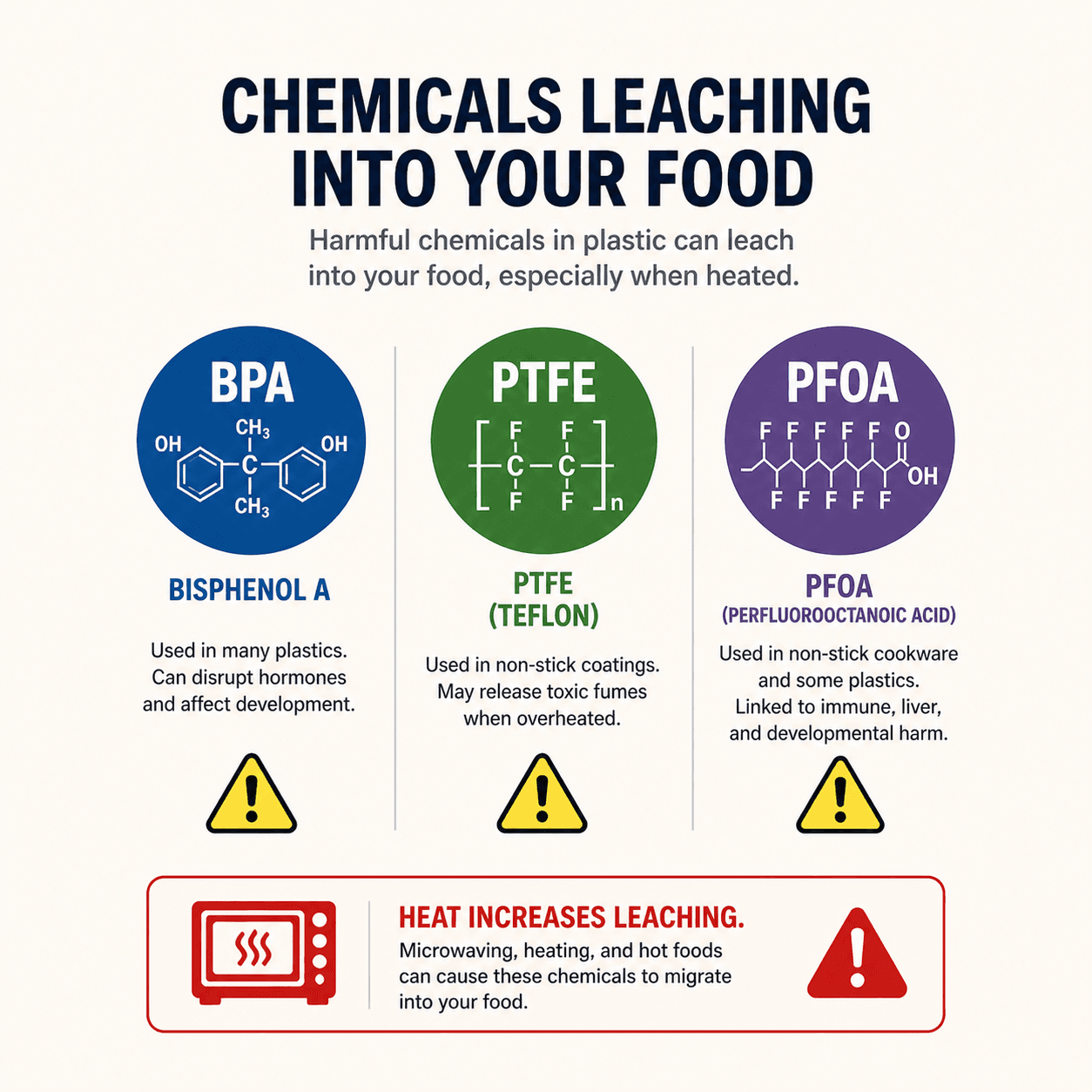
Reason #2: Chemical Leaching (BPA, PFOA, PTFE)
I thought I was being eco-friendly with black plastic. Then I read this and realised I'd been doing the complete opposite. Felt like an idiot, but at least I know now.
Lisa J., Melbourne
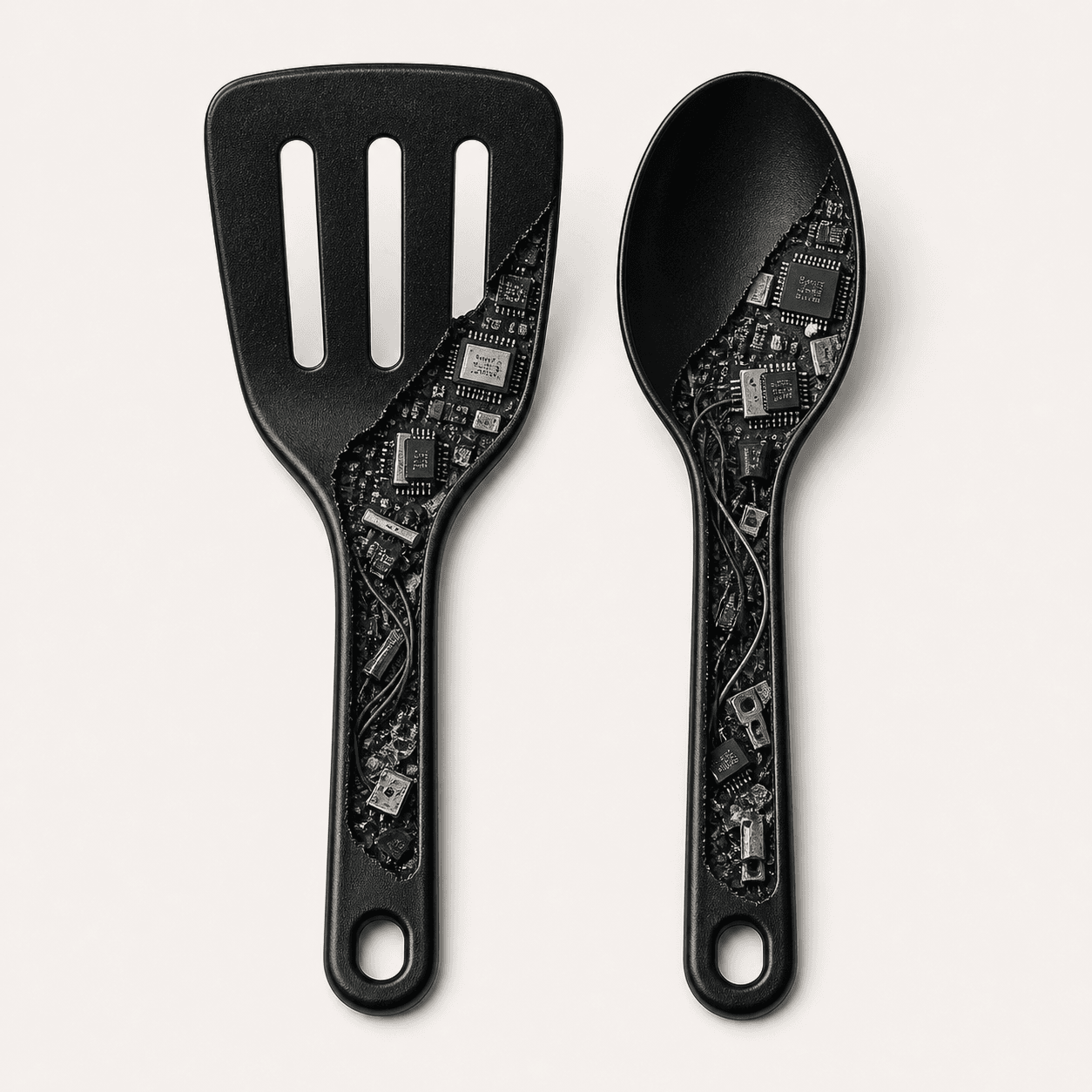
That Black Spatula? It's Made From E-Waste. This one blew my mind.
Black plastic kitchen utensils, spatulas, spoons, ladles… are often made from recycled electronic waste.
Sounds eco-friendly, right? Recycling is good.
Except... electronics contain toxic flame retardants to meet fire safety standards.
When manufacturers recycle this e-waste into kitchen utensils, those flame retardants
come along for the ride.
The most common ones? PBDEs (polybrominated diphenyl ethers).
And here's the terrifying part: A paediatrician at the University of Rochester Medical Center told me that "flame retardants have been detected in breast milk samples across the US."
BREAST MILK.
That means these chemicals are bioaccumulating in mothers' bodies and transferring directly to infants.
These chemicals are linked to:
• Brain and reproductive system development issues
• Potential cancer risk
• Thyroid dysfunction
• Behavioral problems in children
Every time you stir your food with a black plastic spoon, you're potentially releasing
these flame retardants into your meal.
And they're accumulating in your family's bodies over time.
The bottom line: That convenient black plastic utensil is a Trojan horse of
industrial toxins.
Reason #3: Black Plastic Contains Recycled Electronics & Flame Retardants
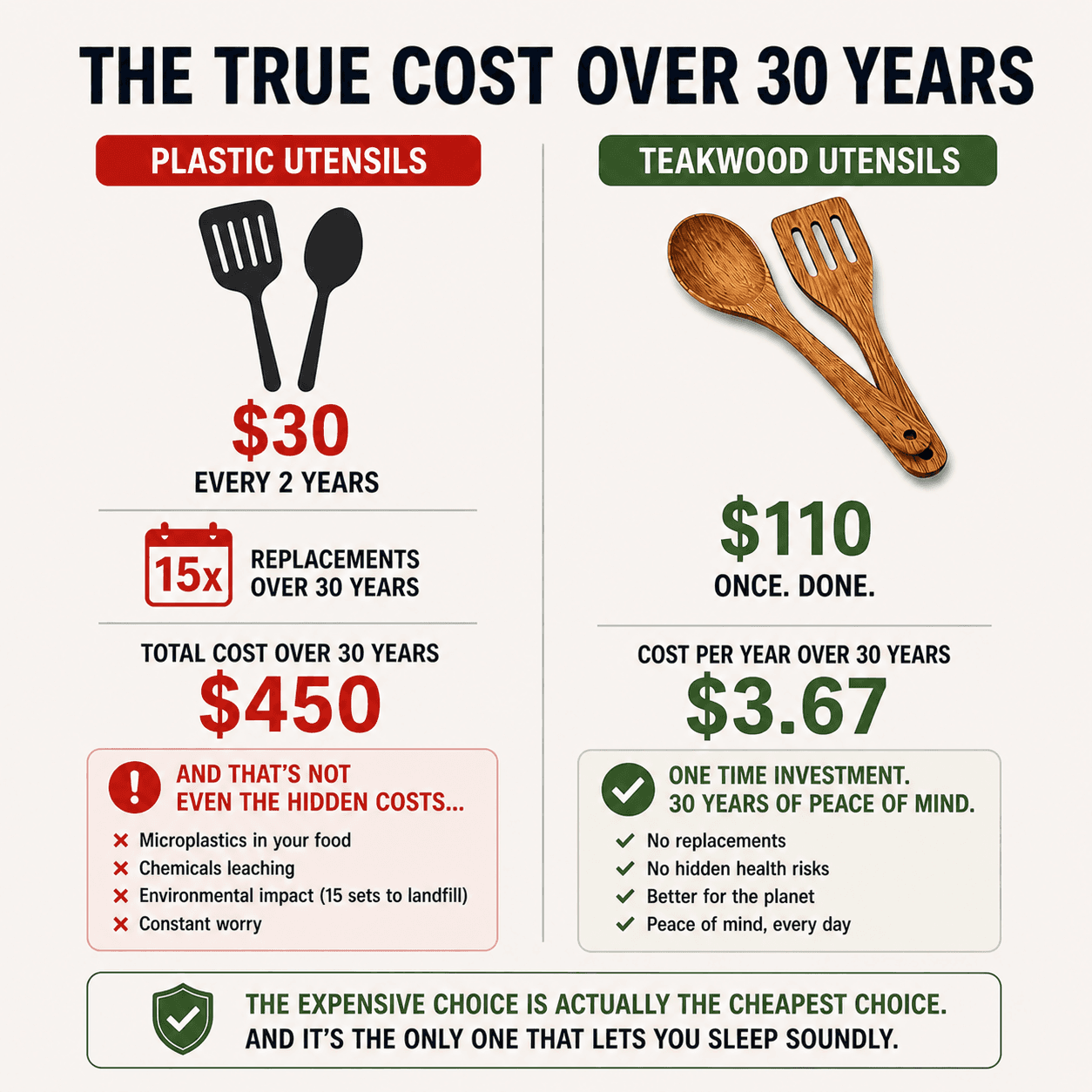
I use to think $110 was expensive for utensils… until I found out the TRUE cost of plastic over 30 years… oh… and the hidden costs…
Here's the math:
Plastic utensils: $30 every 2 years = 15 replacements over 30 years = $450 total.
That's not including the constant worry, the microplastics, or the chemicals.
on the other hand…
Teakwood utensils: $110 once. Done. Never replacing.
Cost per year over 30 years? $3.67
Let me break this down further:
When you buy cheap plastic utensils, you're not just paying for the utensils. You're paying for:
• Replacement costs every 2 years ($450 over 30 years)
• Environmental guilt (15 sets to landfill)
• Health uncertainty (30 years of microplastics + chemicals)
• Constant decision fatigue (do I replace these yet?)
With teakwood? You buy once, and it's done.
No replacement costs. No environmental guilt. No health worry. No decision fatigue.
Here's the real kicker: You're also protecting your expensive cookware.
Metal utensils scratch non-stick pans. Plastic utensils wear down and shed particles. Teakwood? Gentle on every surface.
Replace just ONE non-stick pan ($50-100), and teakwood already pays for itself.
The expensive choice is actually the cheapest choice. And it's the
only one that lets you sleep soundly.
Reason #4: The Hidden Cost of Cheap Utensils
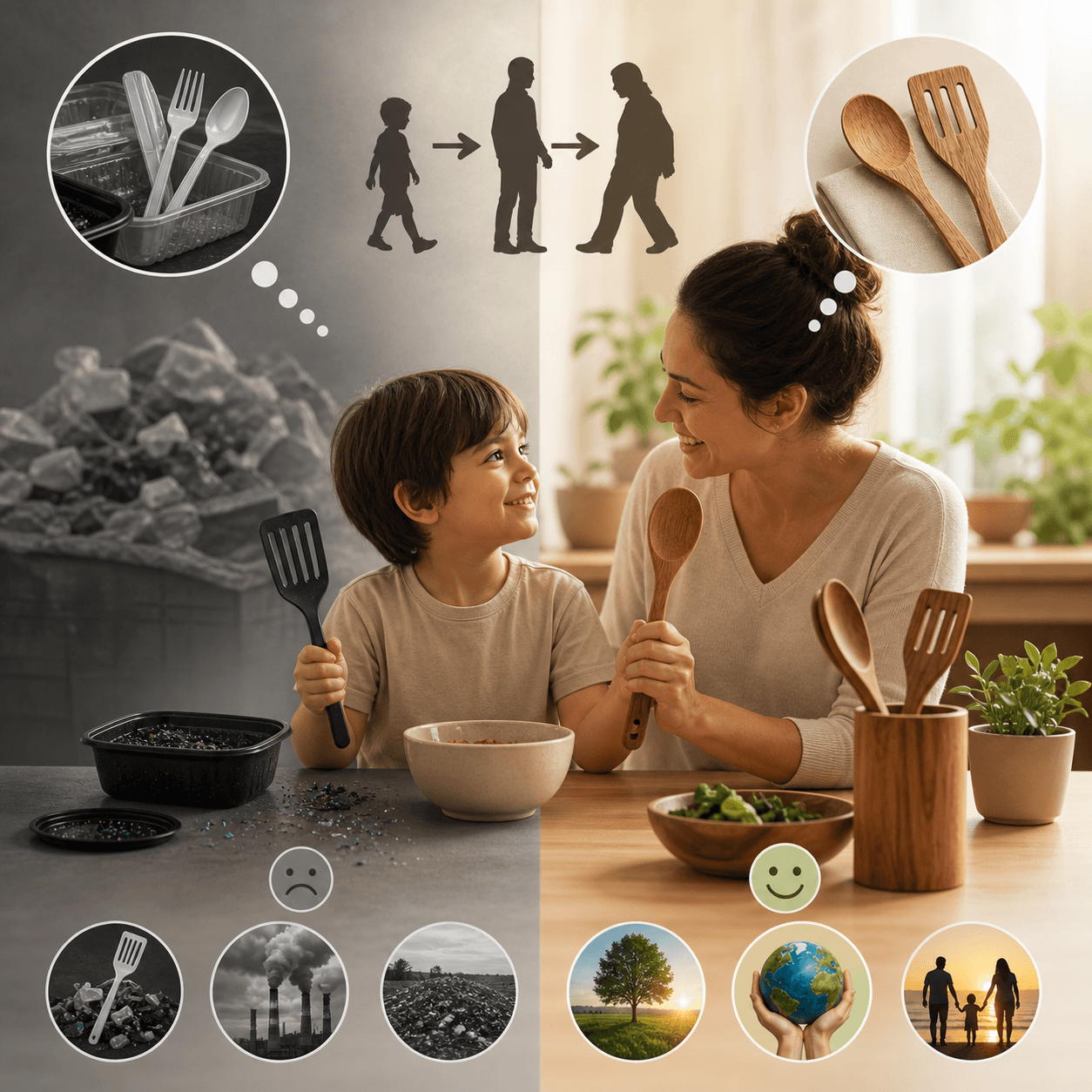
Here's something nobody talks about…
modelling behaviour.
Kids learn by watching. What we normalise in our homes becomes their normal.
If your kids grow up eating meals prepared with plastic utensils that leak chemicals
and shed microplastics, they'll grow up thinking that's just... how it is.
They won't question it. They won't know there's a better way.
And when they're adults with their own families, they'll repeat the cycle.
But here's the deeper issue:
If we care about sustainability. If we care about protecting the environment for our
kids' future. We need to start making different choices NOW.
Plastic utensils need to be replaced every few years. Each replacement = more plastic in landfills. More petroleum used. More environmental damage.
Meanwhile, one set of teakwood utensils lasts 30+ years. One purchase. Done.
That's the legacy we're creating. Not "better is normal." But "sustainable is
non-negotiable."
Every meal your kids eat with a wooden spoon instead of plastic is a lesson:
• Quality matters
• Longevity matters
• Environmental impact matters
• Your health matters
They're not just learning about utensils. They're learning about values.
They're learning that you don't buy the cheapest option. You buy the option that
aligns with who you are.
They're learning that protecting your family's health is worth the investment.
They're learning that small daily choices create big environmental impact.
We're not just choosing utensils. We're choosing what values we pass down.
Reason #5: You're Teaching Your Kids That This Is Normal
After discovering what was in my plastic utensils, I needed something genuinely better.
Teakwood was it.
One switch eliminated the worry, protected my family, and actually looked beautiful in my kitchen.
Why Teak? Because it's:
• Naturally antibacterial
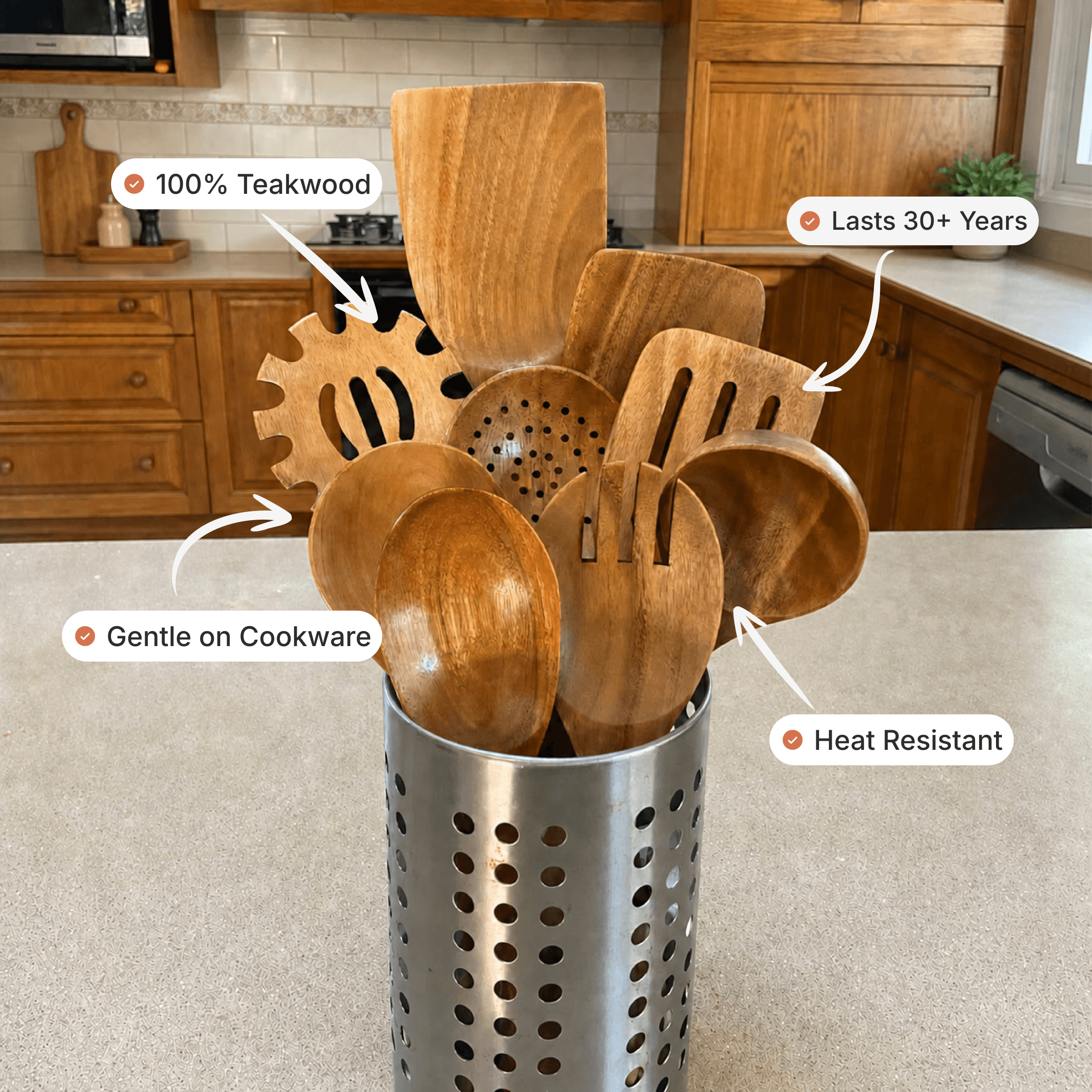
• Lasts 30+ years
• Gentle on cookware
• Beautiful enough to display
• An investment in your family's health
And I know what you're thinking…
"But I've had wooden utensils before..."
True. But most wooden utensils are bamboo or cheap softwood that degrade in 5-7 years.
Teakwood is different. It's denser, naturally antibacterial, and actually lasts a
lifetime. You're not replacing wooden utensils every few years, you're buying once.
"well... won't it scratch my non-stick cookware?"
No. Teakwood is gentle on every surface. Unlike metal utensils (which scratch), teakwood won't damage your pans.
Unlike plastic (which sheds particles), it won't contaminate your food.
It actually protects your cookware investment.
"but still… Isn't wood unhygienic?"
Actually the opposite. Teakwoods natural properties kill bacteria faster than plastic.
Studies show bacteria die on wood surfaces, while they multiply in plastic scratches.
Teakwood is nature's antibacterial solution.
Here's the solution that convinced me…
It's a beautiful 9 piece set from Stone & Flame, all handcrafted and sustainably made.
I love mine so much, I wanted to share it with you.
You can check the availability below!
100 day money back guarantee (zero risk)
1 tree planted with every purchase
Ships within 24 hours (Australia Wide)
I'm so glad I bought this set. I've been using them for a few weeks and they've exceeded my expectations. Super happy!
Mia S., Sydney
They are worth every cent, I'm in love with my new teak set!
Jessica A., Sydney
Here's What I Switched To